
Myth or Truth: "Heavy Lifting Ruins Your Pelvic Floor." 🏋️♀️
Common Doesn't Mean Normal: Pelvic Floor Myths Debunked
We're excited to share the next series installment of debunked pelvic floor myths.
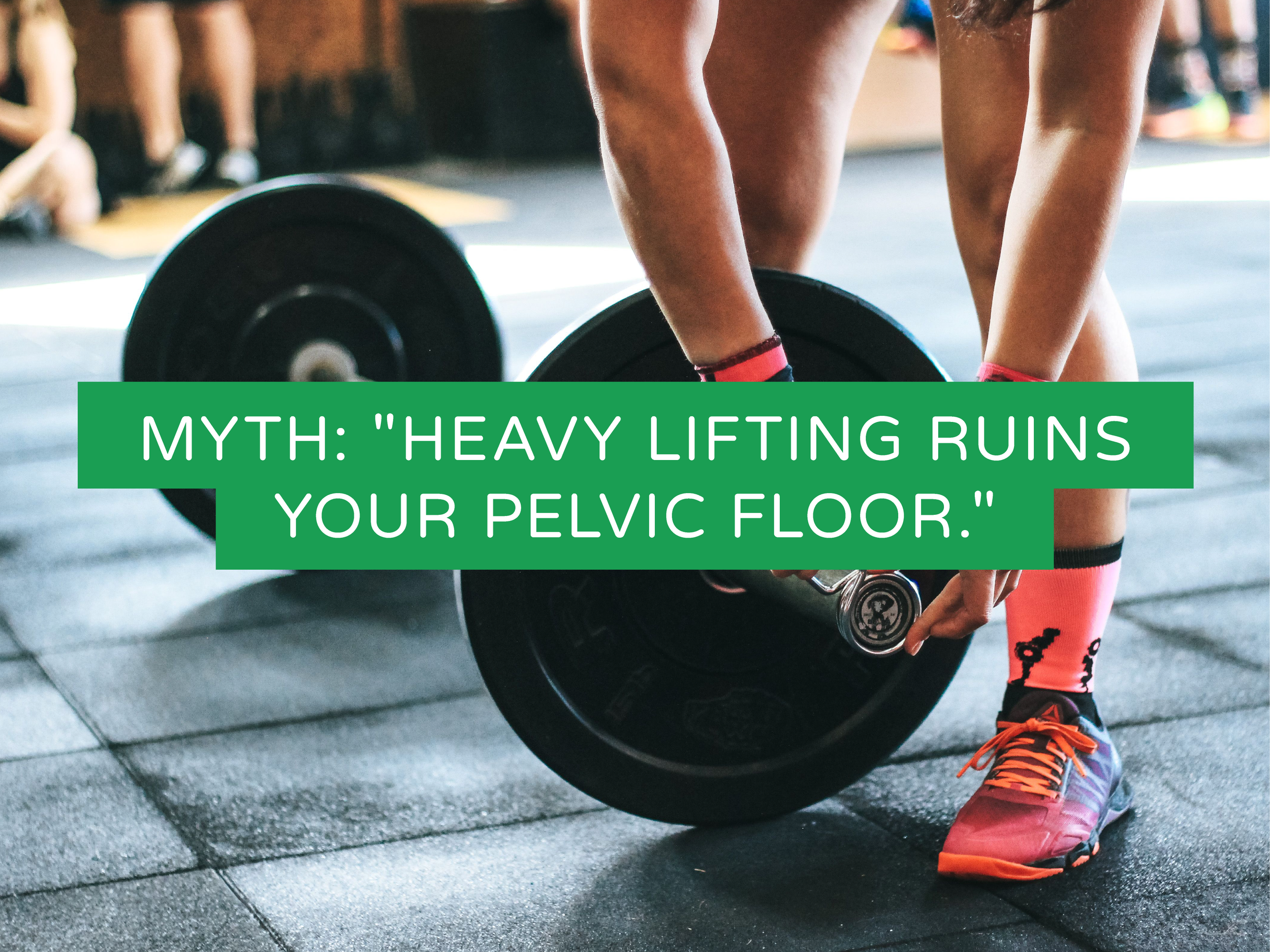
“MYTH #3: “Heavy Lifting Ruins Your Pelvic Floor.””
You've probably heard the advice: "Don't lift anything heavy—you'll damage your pelvic floor."
The reality is a little more nuanced.
Heavy lifting itself isn't the problem. In fact, our bodies are designed to adapt to physical demands. Just like your muscles get stronger when you progressively train them, your pelvic floor can adapt, too.
The key is how you lift.
Your pelvic floor works together with your diaphragm, abdominal muscles, and deep back muscles to manage pressure during activities like lifting, carrying groceries, picking up your kids, or moving weights in the gym. Good technique, appropriate breathing, gradual load progression, and overall conditioning all play a role in helping your body handle these demands.
Plenty of people—including recreational gym-goers, CrossFit athletes, powerlifters, and manual laborers—lift heavy weights without developing pelvic floor problems.
That said, your symptoms matter.
If lifting consistently causes bladder leakage, pelvic heaviness, pressure, pain, or a feeling of bulging, your body may be telling you that something isn't working as efficiently as it could. That doesn't necessarily mean you have to stop lifting—it means it's worth figuring out why those symptoms are happening.
Treatment may include:
Assessing your breathing and pressure management during lifting
Optimizing lifting technique and movement patterns
Improving pelvic floor coordination, strength, or relaxation, depending on your needs
Adjusting training volume or load temporarily while building capacity
Creating a plan to help you return to lifting with confidence
The bottom line? Your pelvic floor isn't made of glass. Avoiding heavy lifting altogether isn't the answer for most people—and in many cases, staying strong is one of the best things you can do for your long-term health.
If you're experiencing leakage, heaviness, or pain with lifting, don't assume you have to give up the activities you love. A pelvic floor physical therapist can help identify what's contributing to your symptoms and develop a plan so you can keep lifting safely and confidently.
Because the goal isn't to avoid lifting—it's to help your body meet the demands you ask of it.